Shining a Light on Science: From Cells to Screens with Dr. Pålsson
- Howard Frank
- Biopharma, Biotechnology & Biomedical
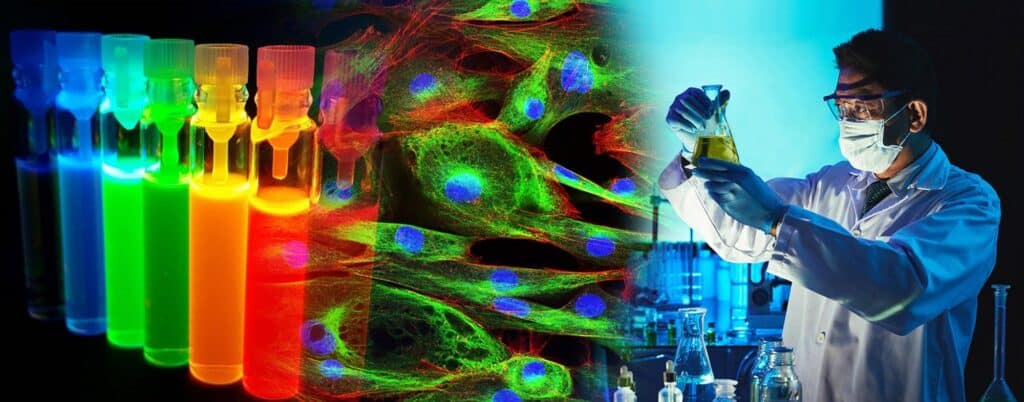
Imagine tiny detectives inside your body, armed with flashlights, searching for clues to disease. Or picture a world where your phone screen is illuminated by eco-friendly, rainbow-bright materials. These are just some of the possibilities being explored by Dr. Lars-Olof Pålsson, a scientist whose work takes him on a fascinating journey from the microscopic world of cells to the vibrant realm of display technology.
Dr. Pålsson is a master of “fluorescence spectroscopy,” a technique that uses light to unlock secrets hidden within materials. He uses special tools to shine light on molecules, causing them to glow in unique ways. This glow, like a fingerprint, reveals information about the molecule’s properties and environment.
Cell sleuths with flashlights:
One of Dr. Pålsson’s areas of expertise is using fluorescence to study what’s going on inside cells. Think of these tiny detectives using their flashlights (fluorescent probes) to investigate crucial cellular processes. By measuring the glow of these probes, Dr. Pålsson can track changes in the cell’s environment, like the presence of specific metals or the level of acidity. This information can be crucial for understanding disease and developing new treatments.
From test tubes to doctor’s offices:
One example of Dr. Pålsson’s research involves detecting prostate cancer. He’s working on a method that uses special molecules that change color based on the acidity of a urine sample. This could potentially lead to a simpler and more accessible screening test than the current PSA test, which sometimes gives false positives.
Beyond the cell: Lighting up your screen:
Dr. Pålsson’s talents aren’t limited to the world of cells. He also uses fluorescence spectroscopy to develop better display technologies. Imagine creating phone and computer screens that are not only brighter and more colorful but also more eco-friendly and affordable. Dr. Pålsson’s work helps achieve this by characterizing the light-emitting properties of new materials, allowing scientists to tailor them for optimal performance.
The tools of the trade:
Dr. Pålsson relies on a variety of sophisticated equipment, including the HORIBA Fluorolog series of instruments. These are like advanced versions of his flashlight-wielding detectives, providing him with the precision and sensitivity needed to unlock the secrets of light and matter.
Dr. Pålsson’s research is a shining example of how science can bridge the gap between the microscopic and the macroscopic, ultimately leading to advancements in both healthcare and technology. So, the next time you look at your phone screen or hear about a new medical breakthrough, remember the dedication of scientists like Dr. Pålsson and his team, who are using light to illuminate the path to a brighter future.
Enjoy the blog? Sign up for your monthly dose of whimsical spectroscopy insights.
Recommended for you