This is the tale of Dr. Kaori Taguchi, Associate Professor at Kyoto University, and a supposedly “lost masterpiece” called “Girl and Swan,” attributed to the German Expressionist Heinrich Campendonk.
January 1, 2026 | Howard Frank
A major focus of Dr. Maria G. Corradini’s work is the inadequacy of static expiration dates. These dates often include large safety margins, leading to consumers prematurely discarding perfectly edible food, which squanders resources. Conversely, a static date can be dangerously misleading if the food was improperly handled during transport, potentially causing unsafe consumption.
- Howard Frank
Carbometrics, a University of Bristol spin‑out now backed by Novo Nordisk, has created a molecule that actually *likes* glucose. It’s a chemical “glove” so precise it can spot sugar in your bloodstream faster than you can unwrap a candy bar—and it could mean the end of daily needle jabs forever.
- Howard Frank
So, where do microplastics come from in our daily lives? Turns out, they’re lurking in more places than you might think. Personal care products, like those exfoliating scrubs and facial cleansers, often contain microbeads that wash straight into our waterways. And let’s not forget synthetic textiles; they shed tiny fibers during each wash, adding to the microplastic pollution in aquatic environments.
- Howard Frank
Let’s be honest: Chile is a country that looks like it was drawn by a distracted cartographer with a ruler and a grudge. It’s the world’s longest country—over 2,600 miles of skinny real estate wedged between the Andes (the planet’s longest mountain range) and the Pacific, stretching from the Atacama Desert, which is so dry even the cacti have trust issues, all the way down to the wind-battered, penguin-friendly tip of Tierra del Fuego. And what do you do with a country that’s basically a climate sampler platter? You make wine. Lots of it.
- Howard Frank
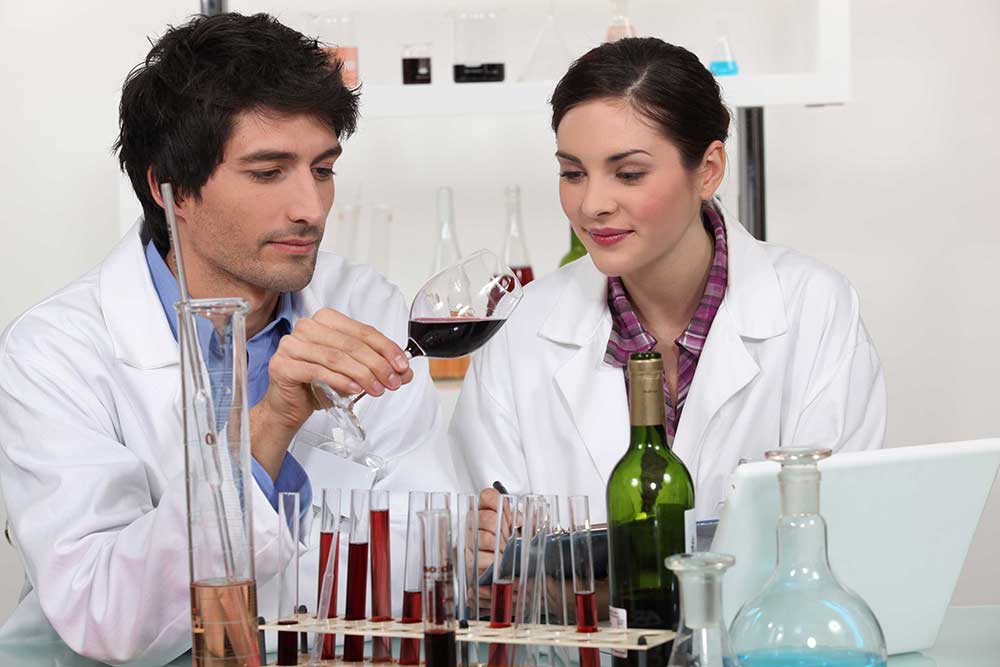
When wildfire smoke decides to hang out in a vineyard for a while, it can leave a not-so-charming souvenir: smoke taint. Think undesirable smoky, burnt, and ashy aromas and flavors in your otherwise perfect Pinot. It’s like inviting a campfire to your sophisticated dinner party, and it just… doesn’t fit. The tricky part is that whether this unwelcome guest shows up depends on a bunch of factors, like how long the smoke hung around and how thick it was.
- Howard Frank
Reproducing Ukiyo-e isn’t just about carving woodblocks and slapping on some vaguely similar colors. As Yuya Shimoi eloquently put it, there’s a world of difference between a mere “reprint” and a true “reproduction” that captures the soul of the original. Apparently, some modern Ukiyo-e “reprints” take artistic liberties, boldly changing colors to suit modern tastes, often with materials completely different from what the Edo-era artists used. It’s like ordering a vintage recipe and ending up with a microwave dinner – the idea is there, but the magic is lost.
- Howard Frank
Now that we’re melting those icy archives faster than a popsicle in July, these ancient carbon materials are getting released into the wild again. What happens next?
- Howard Frank
Fluorescence spectroscopy doesn’t just analyze water; it transforms how we treat, monitor, and ultimately value it.
- Howard Frank
Mapping molecular landscapes 10 million times smaller than the Great Barrier Reef, revealing a world where chemistry’s rules are rewritten.
- Howard Frank
Let’s talk about nanotechnology – the scientific equivalent of David taking on Goliath, but with way more chemistry and way fewer slingshots. We’re dealing with a world so small that if an atom were the size of an apple, a nanometer would be about the size of a grain of salt.
- Howard Frank
Imagine a future where phones are faster, processors are leaner, and you can download an entire season of your favorite show in nanoseconds (okay, we’re still a ways off). But by exploring 2D materials with TERS, scientists could turn this into a reality. The combination of ultra-thin, high-powered chips could not only advance consumer electronics but also unlock new levels of artificial intelligence and quantum computing.
- Howard Frank
Cryogenics is like that magical tool that clears the noise, stabilizes the scene, and lets us see things in high definition. Whether it’s identifying defects in semiconductors or exploring the depths of quantum science, cryogenics plays a pivotal role.
- Howard Frank
Imagine a world where your phone screen glows brighter, lasts longer, and consumes less energy. It’s not just a dream; it’s the potential reality thanks to the magical world of fluorescence spectroscopy and the tireless research of Dr. Marc Etherington.
- Howard Frank
Did you know that Chile’s diverse topography, with its deserts, beaches, fjords, volcanoes, mountains, lakes, forests, and glaciers, provides the perfect conditions for viticulture? It’s no wonder that Chile is renowned for its exquisite vineyards, producing some of the finest wines in the world.
- Howard Frank
When wildfire smoke lingers over vineyards, it can seep into the grapevines, embedding smoky, burnt, and ashy flavors that no one wants in their glass of Pinot Noir.
- Howard Frank
The power of ALS wasn’t limited to just gathering evidence; it had the magic touch to unravel mysteries and spare victims the anguish of a trial.
- Howard Frank
Imagine a world where hazardous materials could be monitored without getting close enough to feel the heat (literally!). That’s the mission of Dr. Hunter Andrews and Dr. Luke Sadergaski, two brilliant researchers at Oak Ridge National Laboratory (ORNL).
- Howard Frank
Dr. Benjamin de Jourdan at the Huntsman Marine Science Centre is fighting a battle against the invisible but insidious enemies of our oceans: pollutants. From oil spills to pesticides, from pharmaceuticals to tire wear particles, de Jourdan and his team are on the frontlines, armed with cutting-edge technology and an unyielding commitment to marine conservation.
- Howard Frank
Imagine tiny detectives inside your body, armed with flashlights, searching for clues to disease. Or picture a world where your phone screen is illuminated by eco-friendly, rainbow-bright materials. These are just some of the possibilities being explored by Dr. Lars-Olof Pålsson…
- Howard Frank
Embark on a journey with Professor Matthew Langton’s pioneering research, lighting the way to revolutionizing medicine with microscopic Trojan horses and light-controlled molecules.
- Howard Frank
Picture this: a renegade chemist, armed with a laser beam and an insatiable curiosity, delves into the heart of Earth’s carbon cycle. That’s Dr. Juliana D’Andrilli, a scientific Sir Arthur Conan Doyle on a mission to decipher the secrets locked within microscopic organic matter.
- Howard Frank
Ever bitten into a burger that exploded with smoky chipotle zing, only to later discover it was secretly infused with the ghost pepper’s fiery wrath? Welcome to the thrilling world of flavor creation, where companies like Kalsec weave magic with spices, extracts, and a dash of science. But how do they ensure their chili heat is just right, or their vanilla whispers sweet nothings?
- Howard Frank
Imagine finding a Van Gogh you did not know existed, tucked away in a Japanese collection.
- Howard Frank
In a world filled with adventurers, explorers, and daredevils, there’s one modern-day Indiana Jones who’s traded his leather hat and whip for a white lab coat and latex gloves.
- Howard Frank
We’re about to dive headfirst into the wild world of quantum materials and trust us, it’s a ride you don’t want to miss.
- Howard Frank