

The Great Australian Carbon Caper: Down Under (and Underneath)
- Howard Frank
- Environment
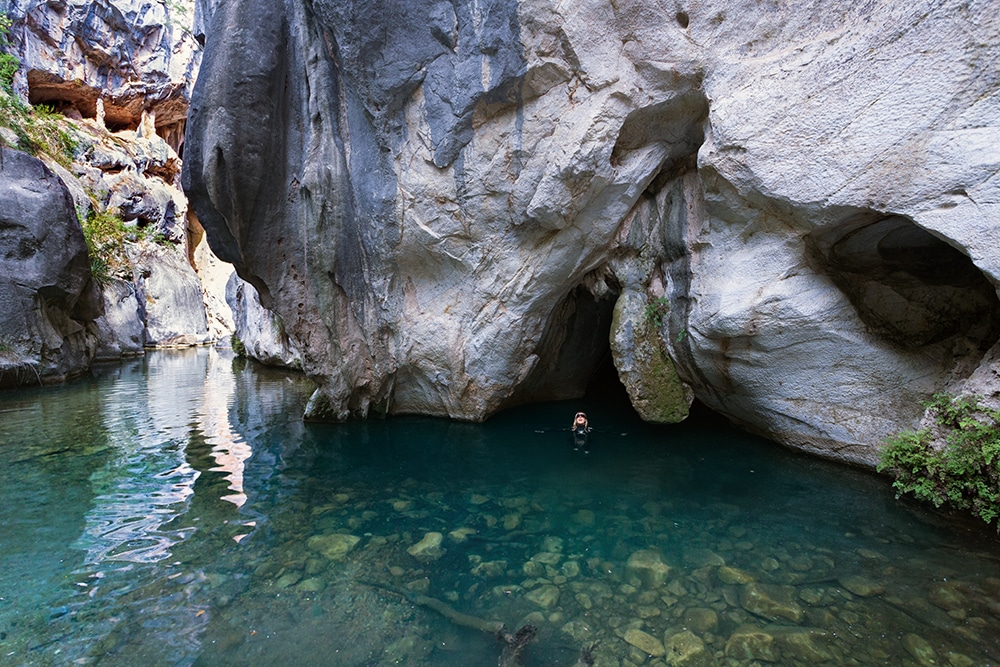
There are some mysteries that keep scientists up at night. Most pressing for global geoscientists: where on Earth did all the carbon go?
It’s no secret that human activity has thrown the global carbon cycle out of whack, leaving a trail of excess atmospheric carbon dioxide in its wake. But here’s the kicker: when researchers calculate the global carbon budget, the math simply doesn’t add up. A massive chunk of terrestrial carbon is missing. While some scientists are busily poking around rivers and glaciers looking for clues, one intrepid team decided the real answer lay somewhere far more subterranean.
Enter Professor Andy Baker and his band of carbon-detecting adventurers.
Into the Wombeyan Caves
This past July, Prof. Baker, Director of Research for the School of Biological, Earth and Environmental Sciences at the University of New South Wales, led a team of 17 brave students and researchers on a grand expedition outside Sydney. Destination? The rugged, limestone-carved wonderland of the Wombeyan Caves.
For up to seven hours a day, after battling three hours of freeway gridlock and dusty dirt tracks, the crew trekked through rocky karst terrain, dodging subterranean shadows in search of dissolved organic carbon.
Joining Baker on this epic quest were Associate Professor Bryce Kelly and postdoctoral researcher Dr. Helen Rutlidge, who helped the students design hands-on experiments to unmask how carbon behaves when no one is watching.
[ Soil & Surface Water ]
│
(Photodegradation)
▼
[ Dark Karst Subsurface ]
│
(Biological Breakdown)
▼
[ Stalagmites & Groundwater ] ──► (The Missing Carbon?)
Sun, Shadows, and Spectrometers
Organic matter is the foundational hero of the aquatic food web, but it’s also a sneaky entity. It travels from surface soils deep into cave networks, embedding its secrets into stalagmites and trickling into the groundwater reserves we drink from.
To figure out whether sunlight or hungry microbes were responsible for breaking down this organic matter, the team set up a series of clever tests:
- The Sunshine Trial: Water samples from rivers, surface pools, cave streams, and bores were left to bake in the Australian sun, with one sample pulled each day to measure how fast photodegradation took hold.
- The Dark Room Experiment: Other samples were filtered, tucked away in warm, dark nooks, and monitored to see how biological degradation ate away at the organic material over time.
To track these micro-level transformations in near-real time, the team didn’t rely on slow, traditional lab methods. Instead, they hauled their secret weapon right into the field: the HORIBA Scientific Aqualog®, now called the Aqualog®-Next.
“It’s great that we can pack it into a Pelican case and drive it wherever we want, including remote cabins in national parks.”
— Prof. Andy Baker
Packed safely in its rugged case, the Aqualog allowed the team to measure fluorescence and absorbance simultaneously in a matter of seconds. It turned a remote park cabin into a high-tech analytical hub, letting students watch organic molecules shift and transform almost live.
Solving the Mystery, One Molecule at a Time
Whether it’s protecting drinking water supplies from unwanted biofilms or decoding thousands of years of climate history locked inside glowing cave stalagmites, understanding dissolved organic matter is key to balancing the planet’s books.
Thanks to a little dirt-road driving, a lot of cavern trekking, and some serious optical science, Prof. Baker’s team is shedding light on the dark, underground paths of the carbon cycle. The missing carbon might still be hiding in the subterranean depths for now, but with an Aqualog in tow, it won’t stay hidden for long.
Enjoy the blog? Sign up for your monthly dose of whimsical spectroscopy insights.
Recommended for you


